


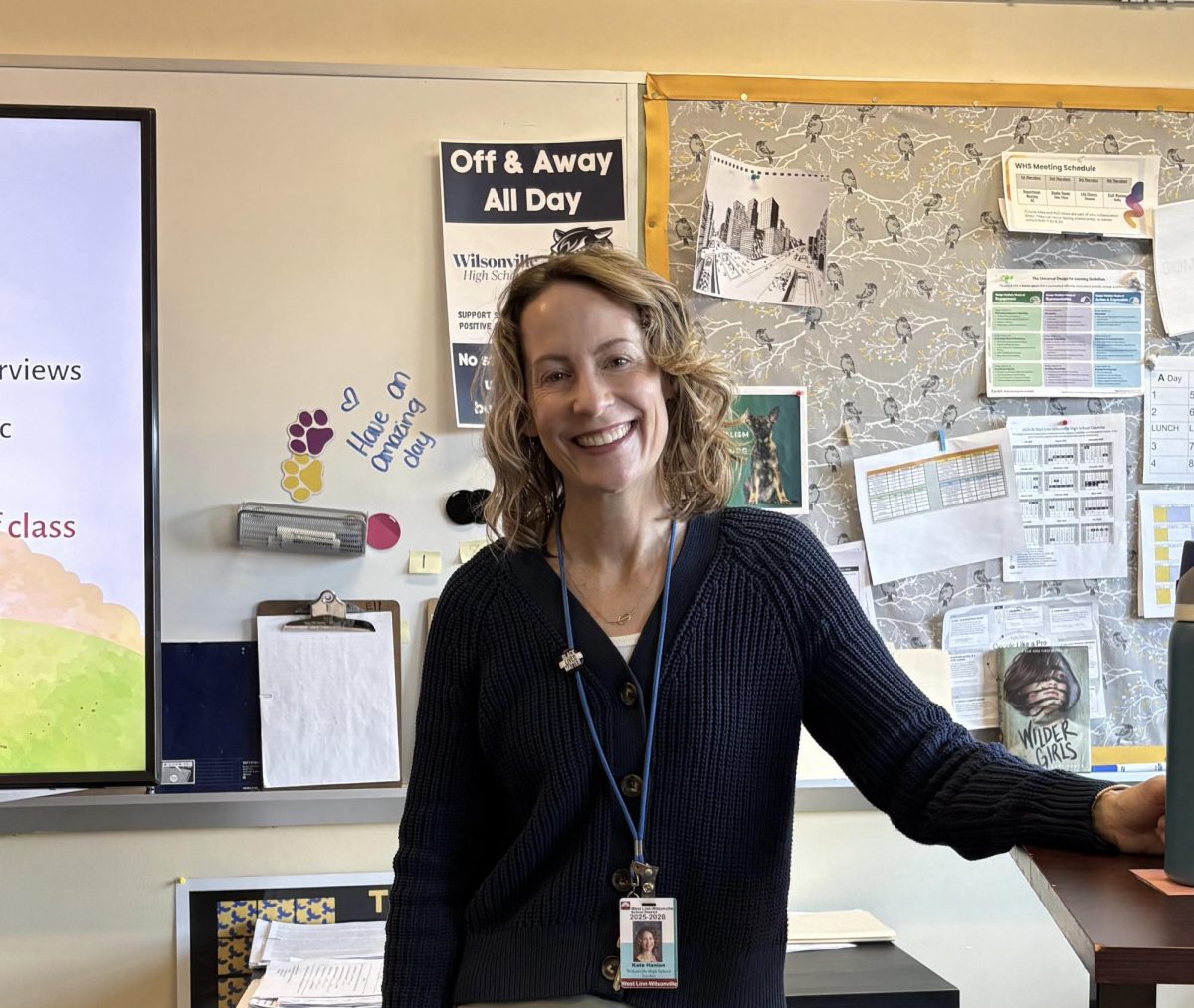
“I worked at a psychiatric treatment center for five years, and I realized I enjoyed working with kids, but the psychiatric treatment center was just heavy and somewhat sad. The work was just challenging. I had a choice to go into psychology or education. And I chose education, because it just felt really positive. I felt like I could give kids a chance through education, whereas the treatment center felt very just heavy and sad.
Greg Hellman from Oregon City High School…had a huge impact. He and his wife actually are both educators that are retired now, but they he had a huge impact on me, specifically around, I think, not just becoming a teacher, but becoming an educator. And I’m saying that differently because to me, an educator is someone who does it for life… and hopefully gets them to think at a higher level intellectually. Not that a teacher doesn’t do that, but a teacher does all these other things, right? Like we make sure your mental health is good and we make sure we communicate with your parents and there’s all these things, but an educator, I think they help me, I don’t know, embrace the spirit of lifelong education.”
When Hanlon was younger, she “wanted to be a dancer, hilarious, or an athlete.”
“So I was a competitive gymnast, and then I sprained my neck. So I was out for enough time to make me realize that I probably couldn’t do that for a long time. So, yeah, I wasn’t really thinking to be honest about being a teacher, or being a teacher was definitely something I realized I liked as an adult.
I’m a rock climber, so I like to go to the gym. I go out to the gorge or Smith Rock. with my friends. I like spending time with my family.
I love hearing students’ conversations and questions and thoughts, and perspectives.”
When asked: Have any of your students ever taught you something important? Ms. Hanlon said “Yes, patience. I don’t know if they knew they were teaching me that, but yeah, I think patience. I think also, I’ve learned a lot about the introvert being a teacher. And this is kind of an odd thing to say. I know if it’s odd, but like I started doing a writing notebook about 10 or 15 years ago and reading students’ writing. I’ll have students who are really quiet in class, and it’s easy to kind of focus as a teacher to focus on a kid who always has their hand raised or is confident speaking. And the notebooks allowed me to see, oh, there’s a whole world happening with the introvert, and I loved that feeling that you can meet a student, not just through conversation, but through their writing.
I hope they [students] remember what they learned. I hope they remember that I was excited. Actually, about teaching and learning and about language and literature. Take more risks…take language learning more seriously.”