





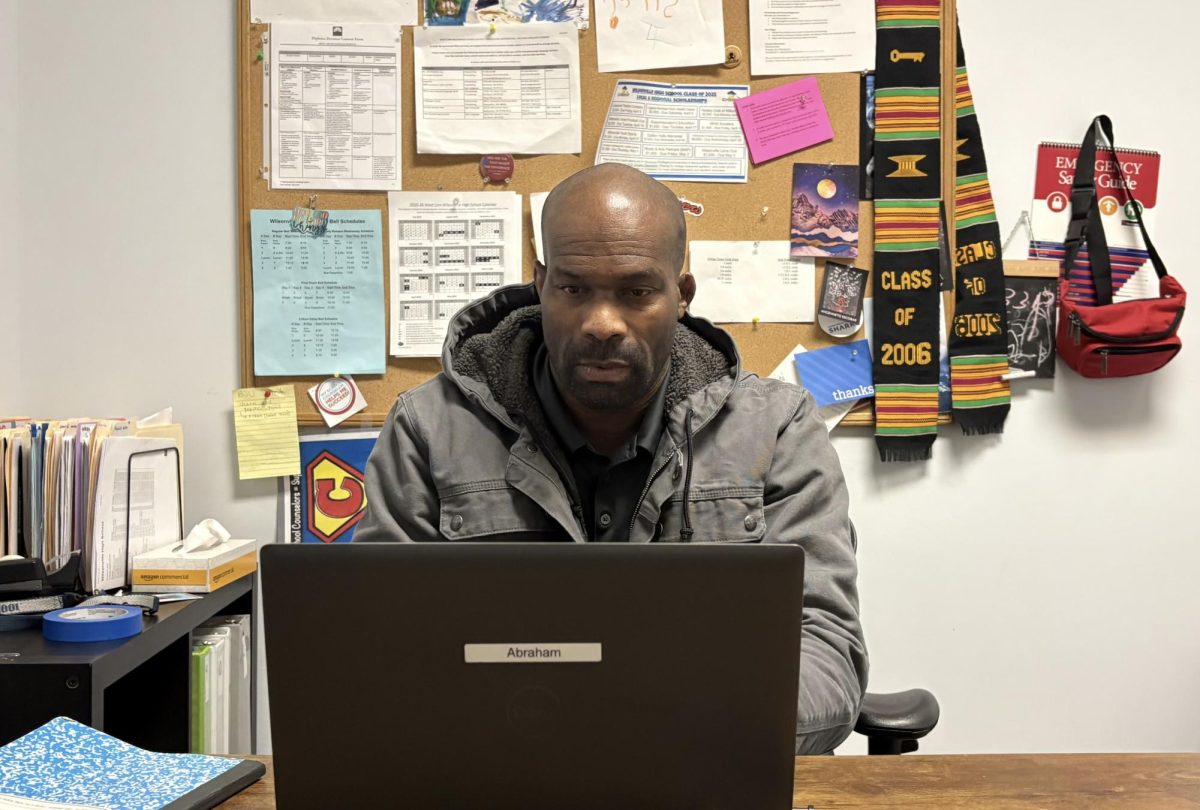
“At a younger age, probably ninth grade, I knew that I wanted to work with youth. I wasn’t quite sure about teaching, so I got into criminal justice or corrections, and did that for a little while before, working at a 2 year and working at a 4 year before getting my master’s in school counseling.
I had a teacher… in middle school, that had a huge impact on me, and, I think, just because she had higher expectations than I, myself. And so, when I kind of noticed that, then I started working probably a little harder and had more confidence. So I would say Mrs. Mitchell, and then in high school, it was Mr. Sanderson.”
Outside of school, Abraham enjoys, “Camping, fishing.
Spending time with family, watching sports, you know, the usual.”
The most rewarding part of being a counselor for Abraham “is seeing kids get through difficult times.
And sometimes we don’t get to see that immediately. But as students come back or we kind of can connect with them later on after high school, it’s always nice to see the success of students.
I would say that resiliency looks different. And some students who are people who you think might be resilient may not, and others that you may not think are. Especially earlier on in my career, always just taking each student as they are.
And that taught me a lot early on.”
Abraham hopes that after students graduate, they remember… “That I care. That the time that you see me or counselors in the building is not just the amount of time that we’re working, you know, and thinking about students and their success to the things that they go through.
So we spend a lot of time where I personally spend a lot of time on the drive home, on the weekends, the evenings, thinking about students, especially if they’re going through a difficult time. Just hoping that they’re okay.
Don’t be afraid to fail. It’s probably held me up a bit. Just not be afraid to fail, and failure is trying and trying and success.”