




Walking through the halls the first few weeks of school is a daunting task as a freshman. Searching for your friends, looking desperately for your classroom, and trying to get to class on time can make the entire process a stressful fiasco.
Upperclassmen are familiar with the school; although some consider them to be scary, they’re often helpful resources to younger students, aiding them in their navigation of classes, decision making, and socializing.
This stereotype is often depicted in 2000’s movies: the big, bad, seniors throw small freshmen into lockers or steal their lunch money. But this fanciful idea of “seniority” has slowly dissipated.
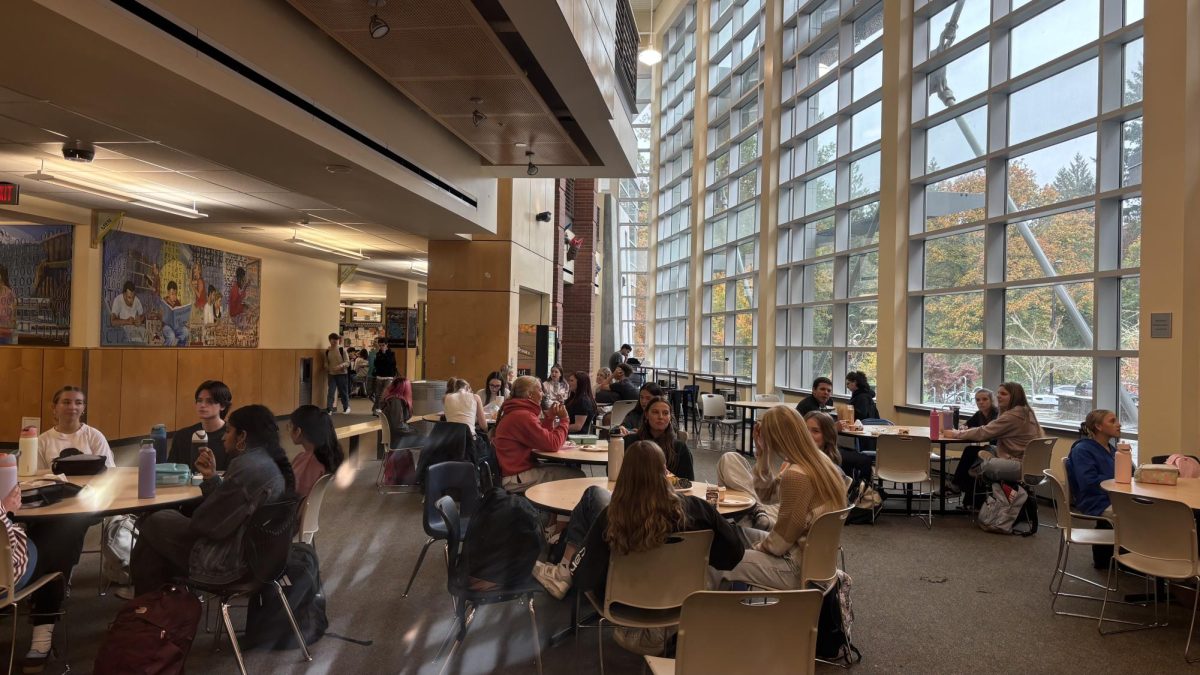
Amanda Tufts, a senior who has attended Wilsonville all four years, speaks of a longstanding tradition at the school: “As a freshman, I didn’t come to the Point at all. I don’t think I ever stepped foot in it once, just because I heard I wasn’t supposed to. I respected it.”
Shea Moomaw, another senior, also notes her experience with this, explaining, “When I was a freshman, underclassmen, (and even juniors), weren’t allowed in the Point. That was just like ‘off-limits.’ Only seniors could eat there. They had authority over me and I respected it because I was a freshman.”
However, the ‘status’ that the Point once had as “off-limits” and “special” no longer dominates the social hierarchy; but is this a bad thing that Wilsonville is moving away from made-up ideas of “Seniority” within school hours?
Tufts states, “I think that the tradition of the Point is dead. And because I feel that less people sit in the Point, a lot more underclassmen naturally assume that there’s space for them to come in. And so it’s not really a spot for only upperclassmen anymore.”
She continues, “I don’t have a problem with it though, the underclassmen are all nice, and they don’t bother anyone.” As Tufts alludes to, more seniors eat off campus than in years before. Even though this pattern of eating out can be fun, social, and adventurous, it begs the question of whether it encourages togetherness or breaks tradition.
Even within sports, the trend towards leaving seniority in the past has continued. Rather than forcing freshmen and sophomores to sit in the back or “earn their way to the top,” it’s often a team responsibility or team reward.
Moomaw explains how on the Wilsonville Girls’ Soccer team, “it doesn’t matter if you’re upperclassmen or underclassmen, someone gets the gear before practice. We really only use the concept of ‘seniority’ for things like picking out jerseys at the beginning of the season, and things like that.”
For Wilsonville Girls’ Lacrosse, Tufts notes the change from her time as a freshman on the team, versus how it is now that she is a senior.
Tufts says, “When I was a freshman on lacrosse, we always had to take out the goals. They were very far away and heavy, but freshmen had to run out and get them anytime we needed them.”
She adds, “On buses to away games, the freshmen were at the front, and the seniors were always in the back. And if you went in the back, they would kick you out. Now, it’s really just separated by JV and Varsity.”
In the academic sense, various grade levels have slowly begun to fuse in the social scene of Wilsonville. Aiding in this transition, many classes typically combine grade levels, giving the learning environment a diverse array of students.
The switch from seniority to the collective responsibility of students is knocking down the age-barrier that sometimes blocks socialization. Rather than freshmen fearing upperclassmen, they look up to them.
Although Wilsonville has lost some of its tradition around “seniority” as a whole, Wilsonville has taken on a new approach of tradition: emplacing a standard that all students should look out for each other.
Whether it be sitting together at lunch in the Point, helping each other clean up after practice, brainstorming during class, or carpooling on the way to school, students are learning to connect based on common interests and through genuine connection, rather than feeling limited to their grade levels.