


Almost everyone has a few teachers they genuinely like, ones that they will miss when the year ends, remember decades later, and they often take electives just to have them again. Most students who share their favorite teachers remember those who saw their students as friends and had a good sense of humor, and tried to make class fun.
However, there is a consequence, as time spent entertaining your students is time that could be used to actually teach them. Many students like their teachers because they do not put in the effort, making their class easy with a relative lack of homework and studying.
Senior Paula Rumayor expressed these views, saying that her favorite teacher was Shannon Heaton in Life 104, as “she’s a nice person.” She also said that she liked classes “which don’t have work outside of school,” like Life usually is.
When adults discuss their favorite teachers, people usually bring up those who actually taught and challenged them; often, they inspired them to go into certain careers and gave them valuable knowledge.
This frequently means someone who taught a “hard” class, with complicated concepts to learn and a lot of difficult work. While some classes have a lot of work, which can be frustrating, the right teacher can make it seem worthwhile to put in the effort and go into detail on the subject, with the wrong teacher making the same material seem like boring, busywork, and unnecessarily challenging.
Sophomore Hendrix Day says that he likes his tough classes, with his favorite teachers so far being World History teacher Alex Willse, U.S. History teacher Michael Esqueda, and Physics teacher C.J. Koll, because “They help me learn better and bring a positive environment to the class.” Day viewed those classes as “rigorous,” but with them, it was “more manageable.”
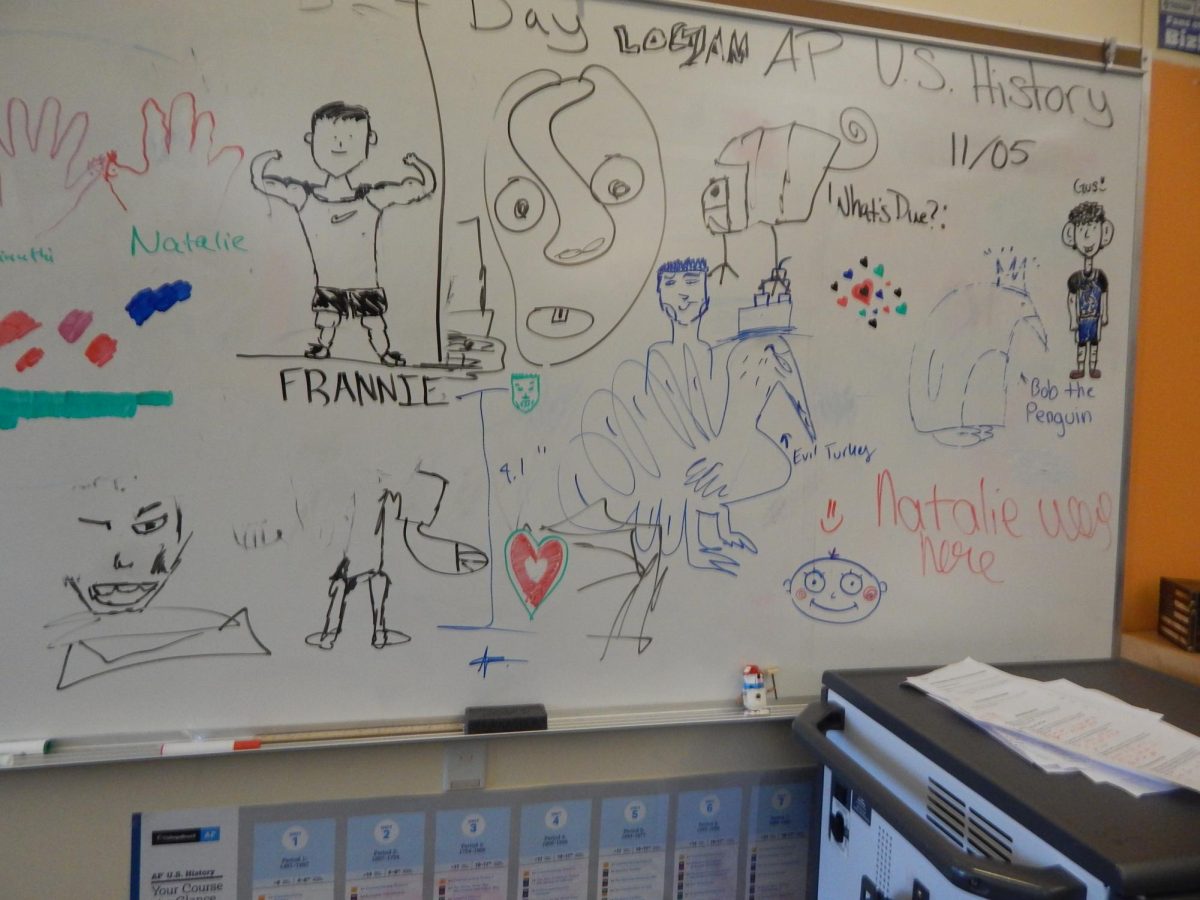
Esqueda, who taught AP U.S. History my sophomore year, was one of my favorite teachers here. He single-handedly made that year one of the most difficult for me here; it seemed like there was always a big pile of reading or a test to study for after each class.
However, I liked him very much; he always seemed to relate to the students and make class interesting. I do not remember very many days of having “work time,” which seems like I have every other period. Esqueda also got his class to like him. We bonded over our shared time, came up with inside jokes, and I feel like most of us were engaged and intelligent.
Esqueda, who currently teaches AP U.S. History and Civics, seems to agree that his students like him, though “they can be jerks sometimes.” He says that his classes are harder than normal, APUSH, “because of how much we have to get through because Oregon starts [the school year] so late.” Civics “is a new class at Wilsonville, and I have to build it from the ground up.”
With such difficult classes, Esqueda views making class entertaining as a necessity for learning, saying, “they go hand in hand,” and “You can’t have one without the other.” To do this, he tries to “use more media and games as well as incorporate movement (e.g., working in stations) and switching sides of the classroom.”
It is clear what makes a “cool teacher;” it involves a willingness to motivate students to learn hard things and make class fun for them in spite of or because of that.