





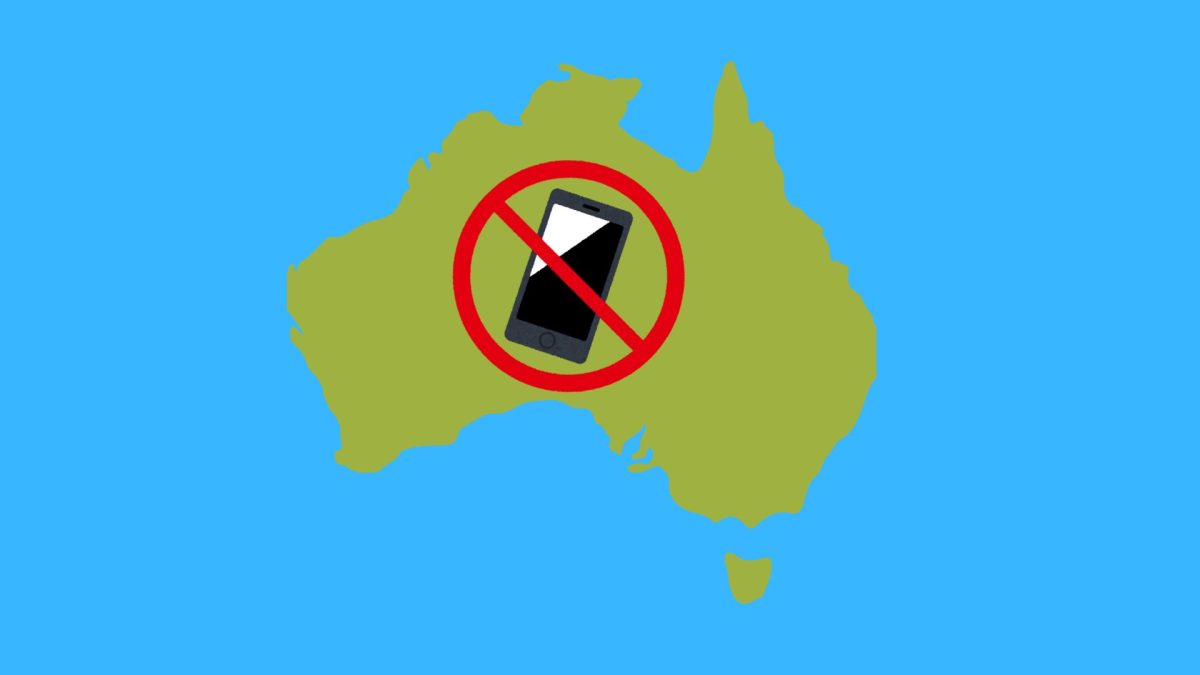
Starting December 10th, Australia will be instituting a new social media ban for users under 16. Some social media apps included in this ban are Instagram, TikTok and Snapchat. Australia’s eSafety Commissioner has also stated that if kids find other apps to gravitate towards, they will also be banned.
Whether or not this will be an effective approach to safeguarding against social media, other countries may follow suit with similar laws. Under this law, digital platforms have come up with ways to determine if a user is over the age of 16, including mechanisms like ID verification and behavioral signals.
There are some guidelines already set by the European Union that limit children’s access to social media, such as requiring a parent’s signature to even form an account. However, total bans — like the one going into effect in Australia — are unprecedented.
Senior, Mia Winters, comments: “I think the law might start out effective, people might fear it at the start. But they will probably find ways around it after, like the first year, you know? I think here, people would definitely try to find ways around it.”
Kids and teens are notoriously rebellious; no matter your feelings on the law, it is only a matter of time before teens find a way to get around the social media ban. “I think the ban would work for some kids, but it can’t be expected of everyone. So, in the long term, I feel like it wouldn’t work. It would just be a bump for kids, and they would continue to use social media,” said freshman Tristan Ramirez.
The United States has never had an all-out social media ban, but there have been similar expectations, such as the TikTok ban. Some students see positive effects of social media bans, such as senior Leanne Saad, as she emphasizes:
“My junior year, the TikTok ban was enacted for a day, and I deleted it. I wasn’t able to redownload it afterwards, which ended up having a huge impact on me just because it improved me as a student. I definitely increased my productivity. I was on my phone all the time, but I just felt more productive, and I actually got work done instead of watching TikTok. I feel like this social media ban will have the same effect.”
The number one question surrounding this new ban is whether it will actually work, because it could revolutionize social media legislation going forward. The ban — on the surface — might sound like a good thing, but a lot of kids have already been introduced into the world of social media for years.
Ramirez continues, adding, “Social media is really normalized, especially now that kids are able to use social media on their phones at a really young age. So, a ban starting now would really impact me and a lot of kids my age because we use it as a way of communication, as a resource for news, and a learning device.”
A social media ban in the United States is harder to enact because states have their own laws, and there are debates on whether it limits freedom of speech. However, we’ve seen that social media bans (i.e., TikTok ban) are possible.
“I’m excited to see if the Australia social media ban will actually work, and if people will take it seriously,” Winters states, posing the question that hundreds of spectators wonder: Is a full-on social media ban actually possible?