








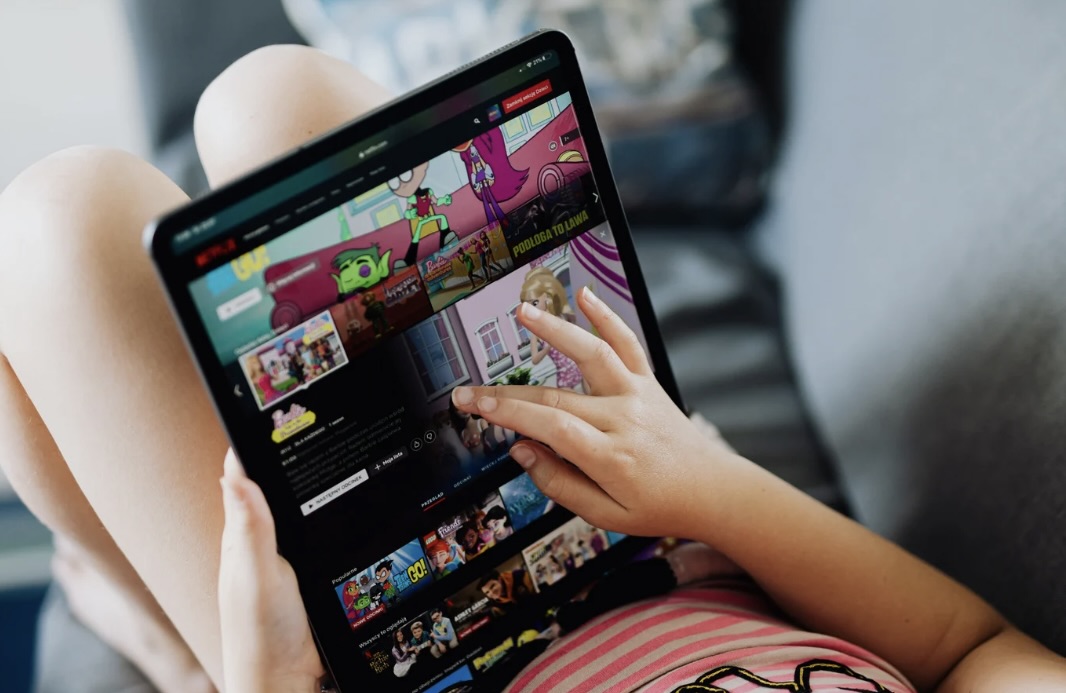
What is arguably a greater concern than teenagers’ screen-time, is that of children much younger. Most teenagers would admit to being very dependent on their phones. While our technology is greatly used for entertainment, they also serve as a resource for our homework, college applications, emails, scholarships, and much more.
iPad kids refer to children from the generation “Alpha”(kids born 2010 onward) who are heavily dependent on their screens. As a kid I was awarded a phone in 7th grade for safety reasons, it was tiny and couldn’t do much besides text and call, and until 8th grade watching TV was a privilege, once I was finished with chores.
AP Literature teacher, Jason Jenkins, shares his experience being hired at a school where “there were a lot of students who needed special attention for social reasons, or academic reasons… and the person who was in charge of academic services said that giving kids iPads as early as possible is the best we can do for their cognitive development.”
Jenkins shares his experience with a close family friend, where the child was given an iPad as a baby and has spent time on it everyday since. Jenkins points out the how he has noticed academic difficulties in the child as well as attencion difficulties.
I went to the nutcracker ballet, and sitting behind me and my sister were three little kids. The entirety of the show they wined, kicked my chair, and pulled at my hair. These children were clearly unfamiliar with how to sit still and be bored without constant entertainment, and they wouldn’t stop no matter how many times I looked back at their parents.
Later that night at dinner a family of five walked in and sat down at the table next to us. The mother carried three massive iPads for her three children. Immediately after sitting down the ipads were propped up in front of the kids each with their own show playing.
The University of Rochester Medical Center states that, “Over time, children with excessive screen use may struggle in social settings, show less engagement with caregivers, and have trouble regulating their behavior.” They also make notice of “abnormalities in the prefrontal cortex.”
“Generally, children’s ability to mature. Their ability to pay attention to things, their ability to have discomfort in social situations, their ability to be bored. Has all gone away, because they have total entertainment forever. In their pockets, in front of their faces and on their wrists.” Says Jenkins.