




These days, it’s easy for students to get connected with clubs, sports, and extracurricular activities outside of school. However, sometimes the focus put into after-school activities has led to a lack of effort towards schoolwork and overall academic excellence. Because of this, many teachers try to offer academic experiences during the school day, rather than giving students added pressure after school hours.
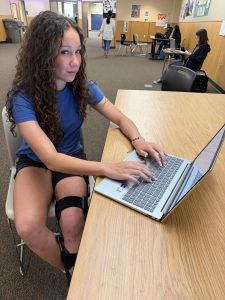
One example is the science department (specifically, ISEF), which allows students to spend part of class time developing projects for annual science fairs and competitions. Culminating academic knowledge and passion, students are guided through year-long research and analysis projects, which are led by Danielle Schroeder, widely known as the science fair event coordinator, project director, and student mentor.
Reflecting on the significance and whole-heartedness of ISEF and the science symposium project, Schroeder shares, “I encourage students and families to consider chasing their passions by trying out for the science fair.”
According to the Wilsonville High School (WVHS) Curriculum Guide, ISEF (International Science and Engineering Fair) is a one-credit class that students can take in any grade. Offered as a science elective, ISEF helps students lean into the research process, dive into their interests and questions, and challenge themselves to articulate thoughts clearly, backed by evidence and strong claims.
Schroeder elaborates, “Our school district science fair is specially called the CREST-Jane Goodall Science Symposium. Our school district has been involved with the science fair for 25 years now. At the high school level, we invite students to actually get pulled out of science class once a week to come up with a project, plan it, and really execute it.”
Ms. Schroeder describes the dedication and effort that goes into science presentations, but truly, ISEF is best understood from the intel given through the lens of current participants. Freshman Eleora D’Souza states, “I feel we’re all really honed in on our own worlds. Science fair is a great way to learn and do things you’re passionate about outside of school, and that actually help you in the real world.”
One of the most passionate and inspirational scientists, Dr. Jane Goodall, still lives on through her strong legacy left; remarkably, in the local area. Four times, Dr. Jane Goodall made monumental appearances around Wilsonville, inspiring and encouraging the younger generations of scientists.
Schroeder expands, “Dr. Goodall was our first keynote speaker 25 years ago. She came to the very first science fair, spoke to our students, and addressed the whole crowd. It was such an impactful moment.” Continuing, Ms. Schroeder acknowledges Dr. Goodall’s lasting impacts on both middle and high schools in Wilsonville.
“After she spoke to our students at the fair that day, she offered her name to the science fair. It used to just be the CREST Science Fair, but it was changed to the CREST-Jane Goodall Science Symposium. She has continued to be a great influence in the science world,” she says.
Evident by the honorable tone of Ms. Schroeder, Dr. Goodall forever changed the outlook for educational science, especially WVHS’s ISEF program. Unfortunately, she now must live on through her lasting legacy. As Ms. Schroeder states,
“With her passing just this year, we really want to find a way to commemorate her impact on our students and her legacy as an environmental scientist who believed in conserving species, protecting our environment, honoring the experiences of animals, and being better humans.”
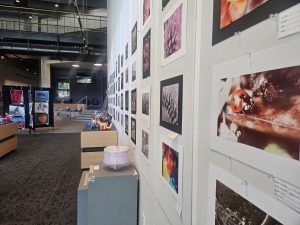
This year, the science fair is going to showcase projects from wind turbines to airplane models. Schroeder mentions, “Seriously, there is something for everyone. Anything that you could imagine, you can expect to see at the science fair.” Held on March 11th at Wilsonville High School, this year’s CREST-Jane Goodall Science Symposium aims to highlight a variety of student work, and most importantly, Dr. Goodall’s timeless legacy.