








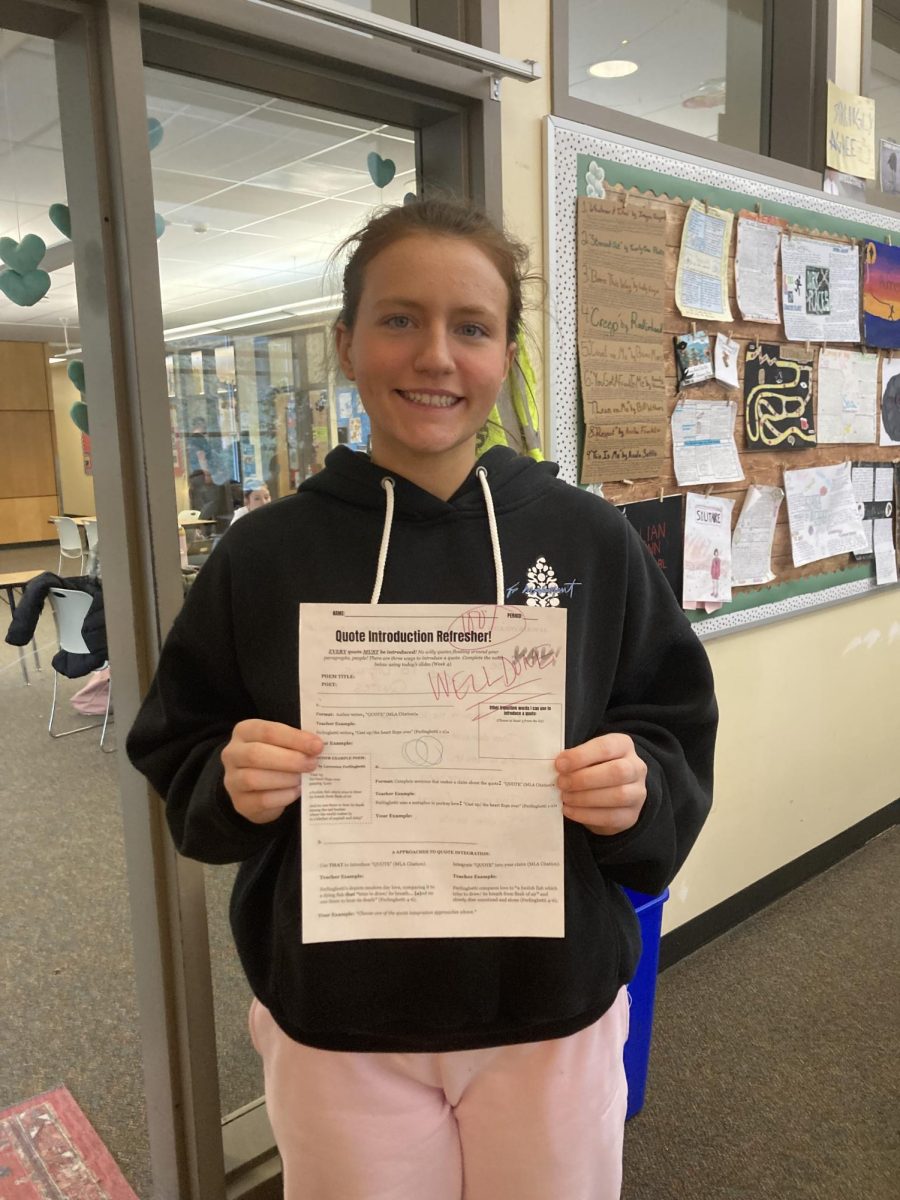
Every high schooler deals with stress. According to an article written by The University of San Diego, “Over 50% of students consider homework a primary source of stress, leading to headaches, exhaustion, and sleep deprivation.” In many Oregon high schools, including Wilsonville, homework often doesn’t count towards a student’s semester grade, but rather just a completion grade.
With homework often not being graded, the question some ask is whether or not homework is even necessary anymore. With multiple hours devoted outside of school to test prep, assignment catch-up, and extra practice problems, are students benefiting from homework? Or, is it just wasted energy?
At Wilsonville High School, students across all four grades have had homework assigned at one point or another. Sophomore Halle Brown states, “Teachers assign homework in my harder AP classes. In those classes, it’s especially beneficial to me to get practice outside of the classroom because it gives me the information and content to do well and feel prepared for the tests.”
As Brown explains, AP classes require more effort from students and extra time outside of class to understand the highly complex material. However, the pressure of getting AP homework done and turned in on time leaves less time to study for other core classes, especially in subjects that don’t require homework.
This can lead to a lack of studying in classes for students that aren’t motivated on their own, resulting in poor performance overall.
Senior Zoey Carlson shares her opinion on homework: “It’s nice to spend time on my own to work on classes that require deeper understanding of bigger concepts. Those extra practice problems can be the difference between an A and B.”
Continuing, Carlson admits, “I think homework in language arts or social studies is kind of pointless. Why would I write an essay outside of school when I know I’m going to need help from a teacher anyway in class?
To her point, a lot of students don’t have resources outside of school to help them study, leaving them feeling lost with assignments. In this case, it would make more sense just doing their work in class. Carlson follows up by saying, “I see how homework helps in classes where you need to do a lot of practice problems. But other than that, it’s kind of just pointless.”
For most, homework is a huge commitment and requires a lot of self discipline. However, Carlson and Brown both agree that in classes where the extra work is needed, it’s worth it.
“I usually study for a minimum of two hours for a class that I know I have work for. For my AP classes I spend hours upon hours,” Brown shares. With outside commitments, two hours a night is a lot for students to mentally keep up with. However, college is right around the corner for upperclassmen like Carlson, and creating solid study habits will equip her with tools to succeed.
Helpful study techniques and habits change the amount of pressure students feel. Cramming the night before a test will most likely not lead to success. Brown suggests a skill that helps her with time management: “I like to break my homework into smaller intervals so it doesn’t seem like it takes up as much time.” This could look like setting a timer for 45 minutes at a time, followed by a 15 minute brain break or something enjoyable.
Whether homework is necessary or not may be a matter of opinion depending on the student and their course load. One thing for sure is, high school is a great time to practice setting homework goals and expectations to help prepare students for life beyond high school.