



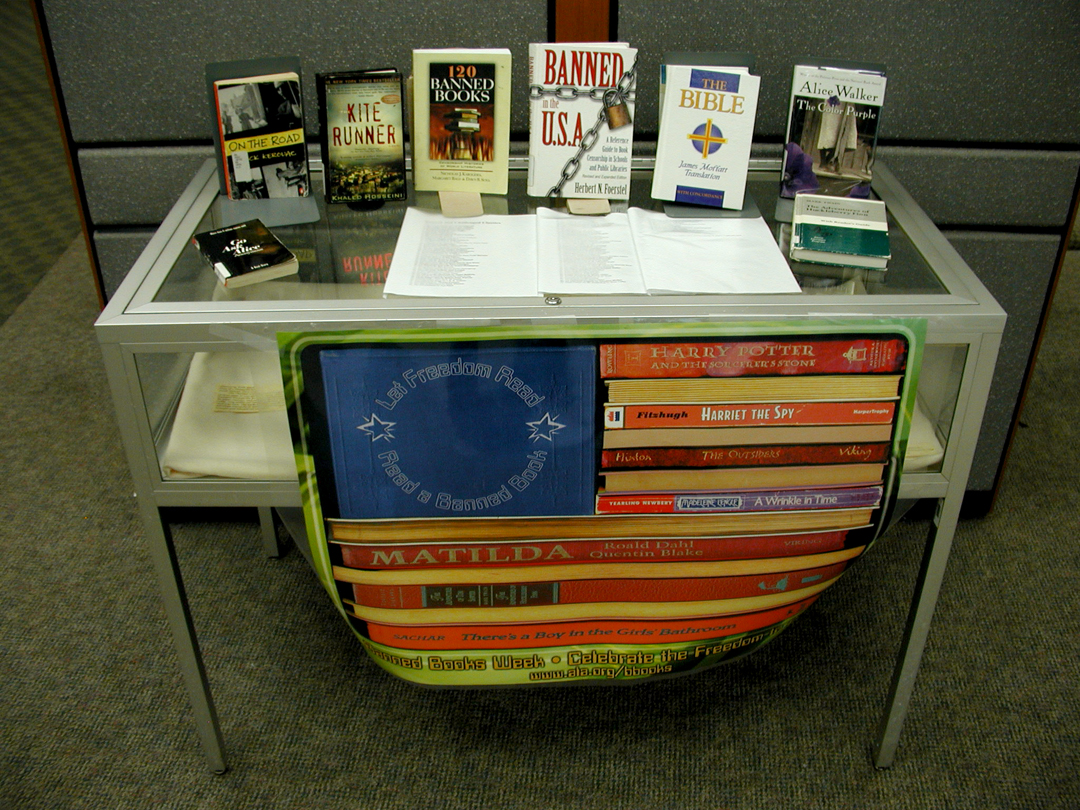
Book bannings across the United States have become increasingly common, with lots of states and districts banning books because of their content. While book bannings are not new, and many books have been banned in America’s history, we are currently seeing them at a larger scale.
One of the first books that was banned on a national scale was Harriet Beecher Stowe’s, Uncle Tom’s Cabin, a book now taught in many schools. Even the West Linn-Wilsonville school district has gone through its trials and tribulations with book bans.
According to school librarian Ms. Coreson, “About four years ago we actually had some stuff happening at the district level where there was a group of parents asking to take nine books out of all of our schools.”
Some of the books that parents were trying to get off the shelves were Crank by Kristina Snow, and Heartstopper by Alice Oseman. These are two books that have been on banned books lists before, because parents do not think they are appropriate for students to be reading.
“What ended up happening was the district got a group of people together. So myself, the librarian from West Linn High School, some teachers, a student, and then some people from the community who kind of had different feelings, thoughts and opinions across the board. And we got together and we all had to read all the books. Then we had a very specific kind of conversation and discussion protocol that we followed,” Ms. Coreson continued.
What’s so important about this process is that the people who are trying to get the books banned actually read the content within them and then discuss them before any books are removed. In the end none of the nine books that were contested were ever taken off the shelves in our school district.
However, there are still many school districts across the country that do have banned books. “I think the general act of banning books is wrong no matter what the context of the book is because it’s a form of taking away free speech, but also people’s abilities to access differing opinions and perspectives,” Senior Jett McCall remarks.
As book bans continue to rise across the United States, many educators argue that these decisions affect more than just classroom reading lists but have a real impact on students learning. According to PEN’s list of banned books there have been 23,000 book bannings in districts nationwide since 2021.
“In a class like AP Literature, you’re reading books that are famous for a reason, because they had an impact. They had an effect on society at the time they were written,” McCall continues, “these books changed people’s way of thinking, or maybe even the world’s way of thinking,”
Schools are a place where literature should be explored, not censored. The Unite Against Book Bans is an organization who continue working across the country to ensure challenged books remain accessible to students.