








Nostalgia, or the feeling of longing toward the way things used to be, is generally harmless and helps to give us the warm fuzzies when thinking about the past. However, the problem nostalgia creates is that some events are extremely unpleasant, yet through nostalgia, we dull the sharp reality of the past and remember it fondly regardless of reality.
This biologically engineered happiness evolved to keep us alive. Hundreds of thousands of years ago, nostalgia was used to invoke feelings of hope and optimism against a dangerous environment. Those who remember being happy and content are more likely to persevere, even when they suffer hardship.
For example, childbirth is an extremely painful process (so I’ve been told) that can take hours and in some cases days. It’s described as unpleasant to say the least, yet your body bathes your brain in hormones like oxytocin, endorphins, and dopamine to blunt the painful experience because having children was evolutionarily important.
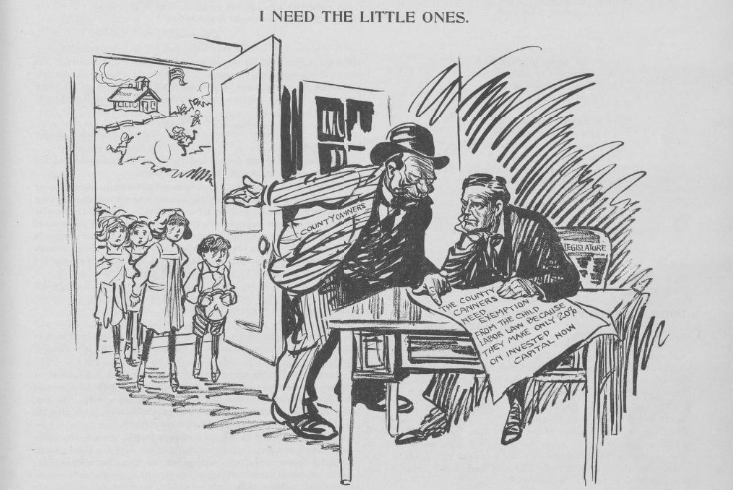
However, in today’s politics, nostalgia is wielded like a weapon against progress that has been utilized for over a century. For instance, between 1890 and 1920, there was a huge turn toward social and economic reform. Roosevelt took to trust-busting, Congress passed laws against child labor and passed both the 17th and 19th Amendments, which strengthened a more democratic voting system.
But every action has an equal and opposite reaction, and the opposite reaction to social and economic progress was Warren G. Harding. Americans had undergone a period of change over a 30-year period, and many wished to go back to a “simpler time” despite those simpler times being the Gilded Age.
The times of the Gilded Age were awful for almost everyone, yet nostalgia fostered a desire to return to the “good old days.” Over the 20 years of the Gilded Age, worker safety was almost nonexistent, Jim Crow ran rampant, especially in the South, and an estimated 150 members of Congress were corrupt in some way.
After 20 years of hardship and 30 years of positive reform, Harding’s “return to normalcy” meant enacting Gilded Age policies that severely damaged the U.S. by giving huge tax breaks to large corporations and rolling back aid for immigrants, the poor, and the lower class as a whole.
His presidency was one of the most corrupt in history. His cabinet accepted bribes from oil companies in exchange for land grants. He strengthened segregation and racial inequality throughout the country and instituted laissez-faire economics that allowed monopolies to reform after decades of resistance during the Progressive Era.
This isn’t the only example of nostalgia being used to justify repressive policy. Nostalgia for the post-World War II boom let people overlook segregation and widespread inequality, and many resisted civil rights, women’s equality, and social reform simply because those movements didn’t exist during the years when the economy felt stable and successful.
This pattern extends beyond history books. Wilsonville High School AP U.S. History teacher Michael Esqueda explains: “I think because it’s very similar to what many of us go through, which is we want to almost bury the bad, not remember it, and highlight the good. I think over time, we start to create our own form of American mythology that kinda corresponds with our psychological nature as humans which is to kinda ignore the things that make us uncomfortable.”
Esqueda continues, “A good example of that would be Donald Trump’s ‘Make America Great Again’ slogan. I think that when you just look at the slogan itself it’s kinda hard to argue against it. You know? ‘Make America Great Again, like ok, sounds great.’ When you really dig deep into where that phrase came from and the history behind it, then you start to kinda tilt your head sometimes.”
It’s a sentiment echoed by Wilsonville senior Brayson Roethler, who puts it simply: “Political promises to return to the ‘good old days’ work because people remember the past more fondly than it really was and look to it for comfort when the present feels uncertain.”
The truth is, America has never been great. We sprang into existence through violent revolution, stole the land from its original inhabitants, and built it on the backs of slaves. No matter what the time period was, we have always fallen short of the point where I could look at this country and say, “that’s a country I would be proud to support.”
There are still so many problems left unaddressed to this day. Things like for-profit prisons, a racial wealth gap that traces back to redlining, and wages that haven’t kept up with productivity since the 1970s. And yet, partially because of nostalgia, we look back at these times of hardship and remember them fondly, and by extension, the policies that created these problems as something worth returning to.