








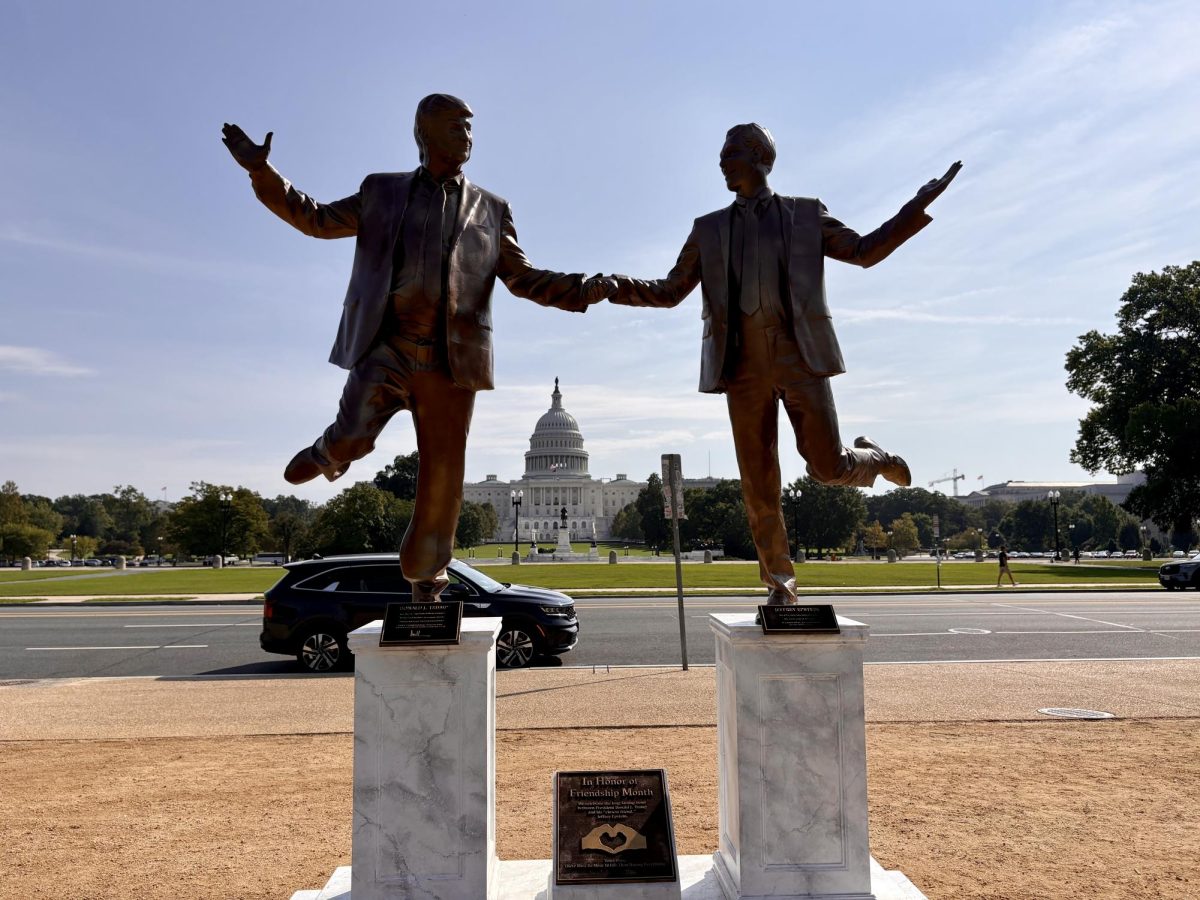
We all know about Jeffrey Epstein’s disturbing and repulsive criminal record. The release of the so-called “Epstein Files” reignited outrage across the United States. As one anonymous teacher put it, “The Epstein files are super disgusting.” Another echoed that frustration, saying, “I think that all these other bad things are happening in the world to take our minds off how disgusting the Epstein files are.”
That reaction reflects a broader public anger — not just about the crimes themselves, but about how long Epstein operated within elite circles before facing serious consequences.
Epstein was not born into extreme wealth or celebrity. He grew up in a middle-class neighborhood in Brooklyn, the eldest of two sons born to Jewish immigrant parents. An academically strong student, he skipped two grades and graduated from Lafayette High School in 1969.
He briefly attended Cooper Union before transferring to New York University, where he studied at the Courant Institute of Mathematical Sciences. He ultimately left without earning a degree.
Despite lacking credentials, Epstein secured a teaching position at the prestigious Dalton School in Manhattan, where many of the nation’s wealthiest families sent their children. Students reportedly found him charismatic, though some of his behavior raised concerns. A parent connection eventually led him to Bear Stearns, then led by CEO Alan Greenberg — a turning point that brought him into the world of high finance.
After leaving Bear Stearns in the early 1980s, Epstein reinvented himself as a financial consultant, founding J. Epstein & Company and marketing himself as a money manager exclusively for billionaires. His most significant client was Leslie Wexner, founder of L Brands, the parent company behind Victoria’s Secret and other major retail brands. Wexner granted Epstein extraordinary financial authority, dramatically expanding both his wealth and credibility.
By the 1990s, Epstein had amassed enormous assets, including property on Little Saint James in the United States Virgin Islands, along with a massive Manhattan townhouse and homes in Palm Beach, Paris, and New Mexico.
With money came access. Epstein cultivated relationships with powerful and high-profile figures, including Bill Clinton, Donald Trump, Prince Andrew, Bill Gates, and several prominent academics and celebrities. Many later distanced themselves after his arrest.
In 2005, allegations surfaced that Epstein had sexually abused a 14-year-old girl in Palm Beach. As investigators looked deeper, dozens of additional victims came forward. Though he initially secured a controversial plea deal in 2008, federal charges were filed against him in 2019 — marking the collapse of the power structure he had spent decades building.
The disgust voiced by many today reflects more than shock at one man’s crimes. It reflects anger at the systems of wealth, influence, and protection that allowed him to rise so high before falling.