








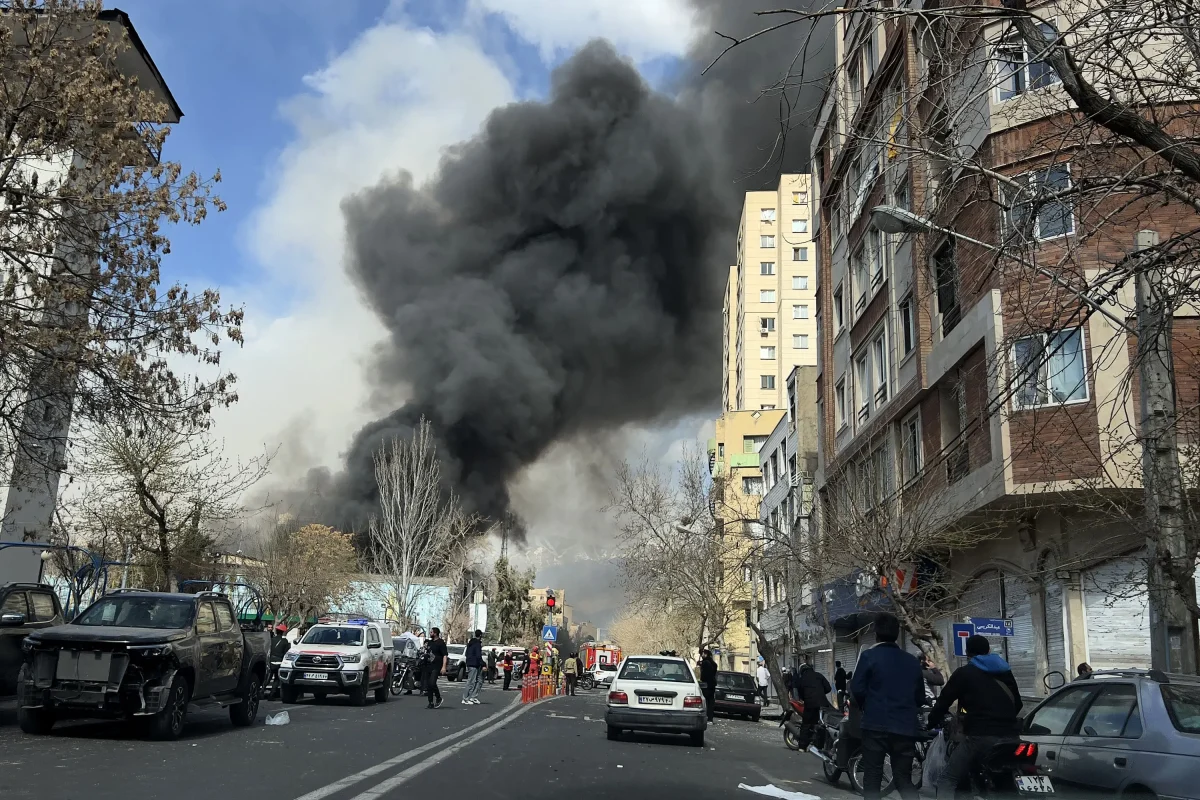
The 2026 Iran war began on February 28, 2026 after the United States and Israel launched large-scale airstrikes on Iran, hitting military sites, missile systems, and government targets across the country, according to Reuters and BBC News reports on the initial strikes.
The strikes killed Iran’s Supreme Leader, Ayatollah Ali Khamenei, and other officials. Iran responded to these attacks by launching missile and drone attacks on Israel and U.S. military bases in the Middle East.
According to Council on Foreign Relations in the article Iran’s War With Israel and the United States by the Center for Preventive Action, “Iran has retaliated by targeting U.S. military facilities, as well as energy and civilian infrastructure in the Gulf states” (CFR Global Conflict Tracker).
While the war didn’t officially start until a recent strike on Iran, long-term tension has been brewing for decades, as explained in background analysis from the Council on Foreign Relations (CFR Backgrounder).
Preceding the Iranian Revolution, Iran and Israel were allies. The revolution completely changed Iran’s government, ideology, and foreign policy, resulting in a strong anti-Israel stance and refusal to recognize Israel as a legitimate state, according to the U.S. Department of State Office of the Historian (State Dept History).
Soon after the revolution, a Iran Hostage Crisis broke out, in which protesters stormed the United States Embassy in Tehran and held 52 Americans hostage for 444 days, as documented by the U.S. Department of State Office of the Historian (Hostage Crisis).
Following these events, Iran’s relations with Israel and the U.S. were severely damaged.
Iran then went on to gain regional influence across the Middle East by supporting allied governments and armed groups, including Hezbollah. Hezbollah is a powerful Shia Islamist political group based in Lebanon with a strong armed militia, as described in BBC News.
Iran has developed a nuclear program capable of enriching uranium, which many countries fear could lead to nuclear weapons. In 2015, Iran signed the Joint Comprehensive Plan of Action (JCPOA), limiting its nuclear program in exchange for lifted sanctions, according to the International Atomic Energy Agency (IAEA Overview).
However, in 2018, the United States withdrew from the nuclear deal under President Donald Trump, reimposing sanctions. After the withdrawal, Iran expanded its nuclear program again, heightening tensions, according to the Council on Foreign Relations (CFR Nuclear Explanation).
Proxy conflicts continued: Iran supported groups like Hamas and Hezbollah, while Israel carried out airstrikes against Iranian-aligned targets, according to BBC News.
The ceasefire did not resolve tensions; diplomacy failed to limit Iran’s nuclear program by early 2026, acting as one driving factor for the U.S. and Israel to strike Iran, according to the Council on Foreign Relations (CFR Analysis).
The war threatens the global oil supply, especially through the Strait of Hormuz. Disruptions in this region can impact oil prices, according to the U.S. Energy Information Administration (EIA Strait of Hormuz).
The United States faces rising fuel prices, potential inflation, and economic strain.
U.S. forces are directly involved, with bases and personnel at risk. The war intensifies debates over foreign policy and defense spending, affecting political decisions, according to the Congressional Research Service (CRS Reports).
The 2026 Iran war reflects decades of tension, including the Iranian Revolution, the hostage crisis, and proxy conflicts. It affects U.S. security, economy, and politics while reshaping the Middle East. Overall, the conflict highlights the long-term consequences of historical grievances and regional rivalries for modern international relations.