






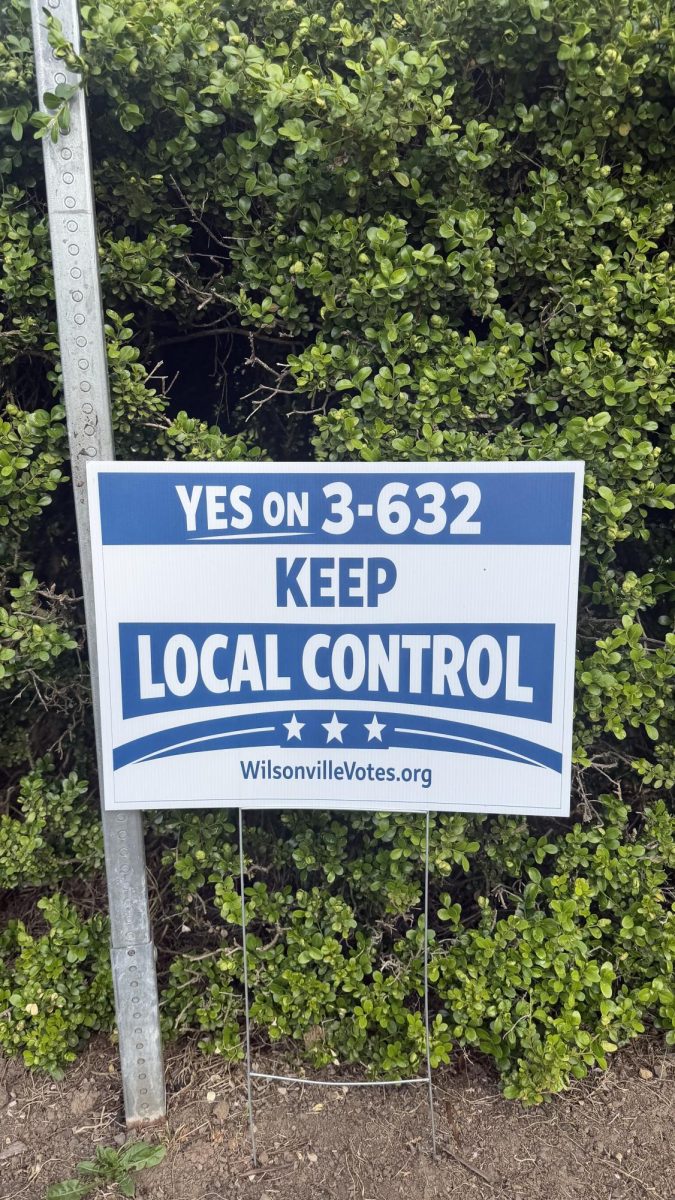
Recently, around Wilsonville, there has been a bit of a sign war over ballot measure #3-632. This measure would require voter approval on Urban Renewal plans in Wilsonville. This measure isn’t saying no to Urban Renewal plans; it’s just putting the urban renewal decisions in the hands of Wilsonville voters.
Urban Renewal plans are government initiatives to develop parts of the city, such as the construction of infrastructure, and public amenities, like streets, utility lines, lighting, public open spaces, and parks.
This past year, a group of Wilsonville citizens worked on a petition to get the measure put on the ballot. Now, it is up to voters to decide if they want the measure to become law.
Eric Winters, an attorney who helped draft the measure, says “Measure 3-632 provides them (Wilsonville voters) with the agency to evaluate the pros and cons of large public debt proposals for developments to signal the direction that aligns with their goals for this City.”
By giving people the ability to vote on Urban Renewal, you are giving people the opportunity to make their voices heard. Winters continues, “Some people may want urban renewal to be used for the City’s current choice: a new village of 5-7 story apartment buildings where the old Fry’s Building sits. But if the voters choose otherwise, the City would have to reconsider its priorities.”
Wilsonville has a history of allowing its residents to vote on urban renewal. Measure #3-632 isn’t aiming to change how urban renewal works in Wilsonville, but rather to protect the preexisting right to vote on urban renewal plans.
“We are living in an extremely polarizing period of history. Most of it is driven by national politics, but it filters down to the local level.”
So what can new voters in Wilsonville do to proactively engage with the local government?
Adding some insight and opinion, Winters shares, “This measure is about as nonpartisan as you can imagine. It asks voters to weigh the value of new development choices that require 30 years of city subsidies. It’s about civic engagement at the local level, where reasonable people can agree to disagree.”